
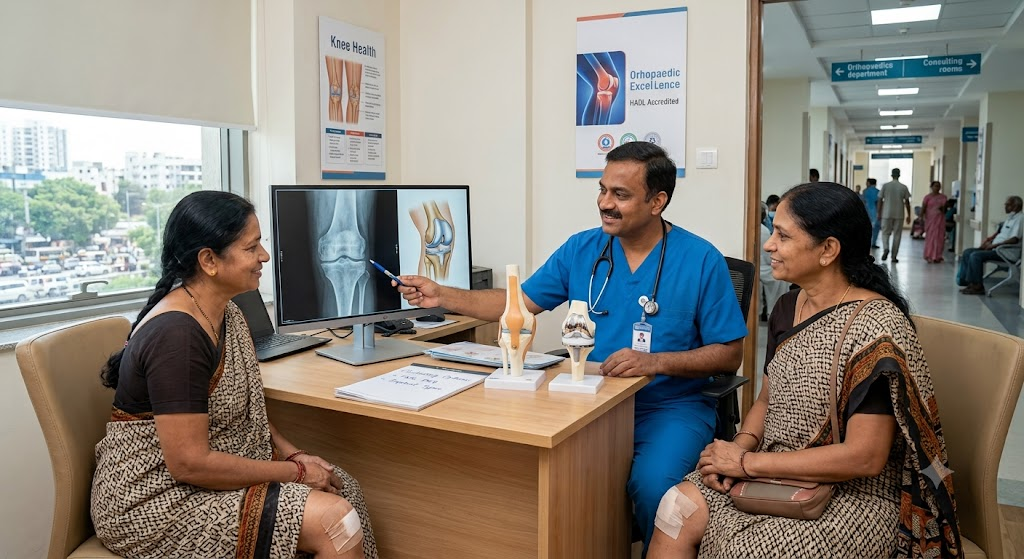
Deciding on knee replacement surgery is rarely a snap decision. It usually comes after months, sometimes years, of managing pain through medication, injections, and physiotherapy—until daily activities like climbing stairs or walking short distances become genuinely difficult. If you’ve reached this point, understanding your surgical options helps you make an informed, confident choice rather than a rushed one.
Here’s a clear breakdown of what knee replacement surgery actually involves, the options available, and what to evaluate before choosing where to have it done.
How Do You Know You Actually Need Knee Replacement?
Not all knee pain requires surgery. Replacement is typically recommended only after conservative treatments no longer provide relief.
- Persistent pain that limits walking, climbing stairs, or sitting/standing
- X-rays showing significant cartilage loss or bone-on-bone contact
- Pain that disrupts sleep despite medication
- Reduced mobility affecting daily independence
- No meaningful improvement after physiotherapy, injections, or lifestyle changes
An accurate diagnosis from an experienced orthopedic in Secunderabad is essential before committing to surgery. Imaging and clinical evaluation should confirm that structural damage—not inflammation or muscular weakness—is the primary cause of your pain.
Types of Knee Replacement Surgery
Knee replacement isn’t one standard procedure. The right option depends on the extent and location of joint damage.
1. Total Knee Replacement (TKR)
- Replaces the entire knee joint surface
- Recommended for widespread cartilage damage across the joint
- Most common procedure for advanced osteoarthritis
2. Partial Knee Replacement (PKR)
- Replaces only the damaged section of the knee
- Suitable when damage is confined to one compartment
- Involves a smaller incision and typically faster recovery
3. Revision Knee Replacement
- Performed when a previous knee replacement has worn out or failed
- More complex, often requiring specialized surgical expertise
4. Robotic-Assisted Knee Replacement
- Uses robotic guidance for precise bone cuts and implant alignment
- Aims for better accuracy and potentially faster recovery
- Increasingly preferred for improved long-term implant longevity
Your surgeon will recommend the appropriate type based on imaging results, joint condition, age, and activity level.
What to Evaluate Before Choosing a Hospital
Not every hospital offers the same quality of orthopedic care. Since knee replacement is a long-term investment in mobility, these factors matter significantly:
- Surgeon experience: Number of successful joint replacement surgeries performed
- Technology available: Access to robotic-assisted or computer-navigated surgery
- Post-operative rehabilitation: Structured physiotherapy programs for recovery
- Infection control standards: Critical for reducing surgical complications
- Implant quality: Use of proven, durable implant brands
- Multidisciplinary support: Access to anesthesiologists, physiotherapists, and pain management specialists under one roof
This is where being treated at the best multispeciality hospital in Secunderabad genuinely makes a difference. Coordinated care between orthopedic surgeons, physiotherapists, and general physicians reduces complications and supports smoother recovery, especially for patients with existing conditions like diabetes or hypertension.
At Kasturi Hospitals, knee replacement patients benefit from this integrated approach—diagnostic imaging, surgical planning, and post-operative rehabilitation are managed cohesively, rather than through fragmented referrals across multiple facilities.
What Happens During Recovery
Recovery timelines vary, but understanding the general phases helps set realistic expectations.
- Week 1-2: Hospital stay, initial mobility with walker/support, pain management
- Week 3-6: Physiotherapy focused on regaining range of motion and strength
- Week 6-12: Gradual return to daily activities, reduced dependency on walking aids
- 3-6 months: Most patients resume normal activities; full strength continues improving
Adherence to physiotherapy is often more important than the surgery itself in determining long-term outcomes. Skipping rehabilitation significantly increases the risk of stiffness and reduced mobility.
Risks and Realistic Expectations
While knee replacement has high success rates, it’s important to have realistic expectations.
- Most implants last 15-20 years with proper care
- Some swelling and discomfort during recovery is normal
- Full recovery, including strength and flexibility, can take up to a year
- Low-impact activities (walking, swimming, cycling) are encouraged; high-impact sports are generally discouraged post-surgery
A transparent conversation with your orthopedic surgeon about expected outcomes—not just surgical success—helps you plan for rehabilitation and lifestyle adjustments in advance.
Making the Final Decision
Before proceeding, ensure you’ve had:
- A clear diagnosis backed by imaging (X-ray/MRI)
- A second opinion if surgery feels premature
- A detailed discussion of surgical options (TKR vs PKR vs robotic-assisted)
- Clarity on hospital infrastructure, surgeon experience, and rehabilitation support
- Realistic recovery timeline expectations
Knee replacement is a significant decision, but with the right diagnostic clarity and surgical team, it can substantially restore mobility and quality of life.
Frequently Asked Questions (FAQs)
1. At what age is knee replacement surgery typically recommended?
There’s no fixed age requirement. It’s based on joint damage severity and pain levels, though most patients undergoing the procedure are between 55-75 years old. Younger patients with severe damage from injury may also qualify.
2. How painful is knee replacement surgery?
Post-surgical pain is managed with medication and typically peaks in the first few days, gradually easing over 2-3 weeks. Most patients report significant pain relief compared to pre-surgery arthritis pain within a few months.
3. What is the difference between partial and total knee replacement?
Partial knee replacement addresses damage in one compartment of the knee, while total knee replacement replaces the entire joint surface. Partial replacement typically involves a smaller incision and quicker recovery but is only suitable for localized damage.
4. Is robotic-assisted knee replacement better than traditional surgery?
Robotic assistance offers greater precision in implant alignment, which can improve long-term implant longevity and reduce complications. However, outcomes still depend significantly on surgeon expertise and patient-specific factors.
5. How long does knee replacement surgery take?
The procedure itself typically takes 1-2 hours, though total time in the operating room, including preparation and anesthesia, may extend to 2-3 hours.
6. When can I walk again after knee replacement?
Most patients begin walking with support (walker or crutches) within 24-48 hours after surgery, as part of early mobilization protocols that support faster recovery.
7. How do I choose the right hospital for knee replacement?
Look for surgeon experience, availability of advanced technology like robotic-assisted surgery, strong post-operative rehabilitation programs, and multidisciplinary support for managing any pre-existing health conditions.
8. Can both knees be replaced at the same time?
Bilateral knee replacement is possible in select cases, but it depends on the patient’s overall health, age, and ability to tolerate a longer surgery and recovery period. Your surgeon will assess suitability individually.
9. What is the success rate of knee replacement surgery?
Knee replacement has a high success rate, with most patients experiencing significant pain relief and improved mobility. Implant longevity typically ranges from 15-20 years with proper care.
10. How do I schedule a consultation for knee replacement evaluation?
You can visit kasturihospitals.com to book a consultation with an orthopedic specialist for imaging, diagnosis, and personalized treatment recommendations.