
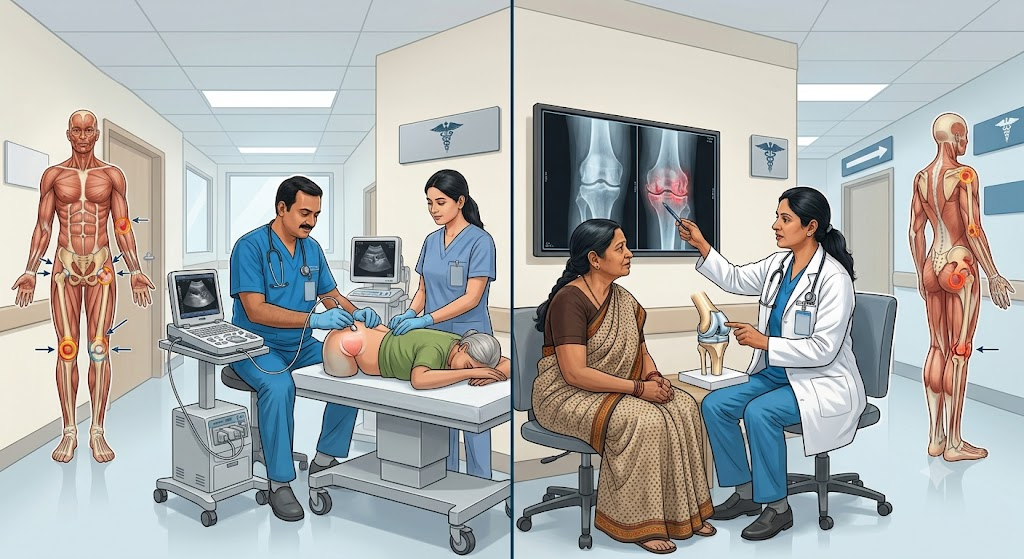
Chronic knee and hip pain rarely announces itself with a clear “next step.” Some mornings it’s stiffness that eases by noon. Other days it’s a sharp ache that makes stairs feel like a challenge. This ambiguity leaves many people stuck wondering: do I need a pain management specialist, or is it time to see an orthopedic surgeon?
Knowing the difference can save you months of unnecessary discomfort—or unnecessary surgery. Here’s a clear, practical breakdown to help you decide.
Understanding the Two Approaches
Pain clinics and orthopedic specialists both treat joint pain, but their approach and goals differ significantly.
Pain management specialists focus on:
- Reducing pain through medication, injections, or nerve blocks
- Improving quality of life without surgical intervention
- Managing chronic conditions like arthritis or nerve-related pain
- Coordinating physical therapy and lifestyle modifications
Orthopedic surgeons focus on:
- Diagnosing structural damage (torn ligaments, cartilage loss, fractures)
- Correcting mechanical problems through surgical or non-surgical means
- Joint replacement or reconstruction when conservative treatment fails
- Long-term structural solutions rather than symptom management
Neither is inherently “better”—the right choice depends on what’s actually causing your pain.
Signs You Should Start With a Pain Clinic
If your pain is manageable but persistent, a pain clinic is often the right first stop.
- Pain fluctuates but hasn’t significantly worsened over months
- You have mild-to-moderate osteoarthritis without severe joint damage
- Imaging shows no major structural issues (torn ligaments, bone-on-bone wear)
- You want to avoid or delay surgery
- Pain interferes with daily activities but doesn’t stop you from walking or bearing weight
- You’re looking for injection-based relief (corticosteroids, hyaluronic acid, or nerve blocks)
Pain specialists often work alongside physiotherapists to build a non-invasive treatment plan focused on function and comfort, rather than jumping straight to surgical solutions.
Signs You Need an Orthopedic Surgeon
Certain symptoms signal that the problem is structural, not just inflammatory, and conservative management alone won’t fix it.
- Visible joint deformity or noticeable swelling that doesn’t subside
- Inability to bear weight or a sensation of the joint “giving way”
- Severe pain that disrupts sleep consistently
- X-rays or MRI showing significant cartilage loss, bone spurs, or ligament tears
- Pain that hasn’t improved despite months of physical therapy, medication, or injections
- A history of trauma or injury preceding the pain
If any of these apply, consulting an orthopedic in Secunderabad early can prevent further joint deterioration and clarify whether surgery is genuinely necessary or if less invasive options remain viable.
Why an Accurate Diagnosis Matters More Than the Specialist You Choose
The biggest mistake patients make isn’t picking the “wrong” doctor—it’s skipping proper diagnostic imaging before deciding. A thorough evaluation, including X-rays, MRI, or sometimes blood work to rule out inflammatory arthritis, should guide the decision, not guesswork or generic online advice.
This is where the best multispeciality hospital in Secunderabad offers a real advantage. Instead of navigating referrals across separate clinics, patients get orthopedic consultation, imaging, and pain management coordination under one roof—reducing delays and miscommunication between specialists.
At Kasturi Hospitals, patients dealing with chronic knee or hip pain are evaluated holistically. If imaging confirms structural damage, you’re guided toward orthopedic care. If the issue is inflammatory or manageable conservatively, pain management protocols are initiated first—avoiding unnecessary surgical referrals.
A Practical Decision Framework
Ask yourself these questions:
- Has the pain lasted more than 3 months without improvement? → Consider imaging and orthopedic evaluation
- Is there swelling, instability, or joint locking? → See an orthopedic specialist
- Is pain manageable with rest, ice, or mild medication? → Start with pain management
- Have you already tried physiotherapy without results? → Orthopedic evaluation is the next step
- Do you have a known injury or trauma history? → Orthopedic assessment first
The Bottom Line
Chronic joint pain doesn’t have a one-size-fits-all solution. The right path depends on whether your pain stems from inflammation and overuse, or from structural damage that requires mechanical correction. Getting an accurate diagnosis early—rather than guessing which specialist to book—saves time, money, and unnecessary discomfort.
Frequently Asked Questions (FAQs)
1. How do I know if my knee pain is arthritis or something more serious?
Persistent stiffness, especially in the morning, that improves with movement often points to arthritis. Sudden swelling, instability, or sharp pain during specific movements suggests a structural issue requiring orthopedic evaluation.
2. Can pain management delay the need for surgery?
Yes, in many cases. Injections, physical therapy, and medication can significantly reduce pain and improve function, sometimes delaying or even eliminating the need for surgical intervention, especially in early-stage arthritis.
3. What tests are needed before deciding between pain management and surgery?
Typically, X-rays and MRI scans are used to assess joint structure, cartilage condition, and ligament integrity. Blood tests may also be ordered to rule out inflammatory conditions like rheumatoid arthritis.
4. Is knee replacement the only option for severe joint damage?
Not always. Depending on the extent of damage, options range from arthroscopic surgery and partial replacement to full joint replacement. An orthopedic specialist can determine the least invasive effective option.
5. How long does it take to recover from hip or knee surgery?
Recovery varies by procedure, but joint replacement surgeries typically require 6-12 weeks for basic mobility, with full recovery and strength taking several months alongside physiotherapy.
6. Can young people need orthopedic care for joint pain too?
Yes, sports injuries, ligament tears, and trauma-related joint damage aren’t limited to older adults. Younger patients with persistent joint instability should also seek orthopedic evaluation.
7. What’s the benefit of visiting a multispeciality hospital for joint pain?
It allows coordinated care—diagnostic imaging, orthopedic consultation, and pain management—without delays caused by referrals across different facilities, leading to faster, more accurate treatment decisions.
8. Are cortisone injections a long-term solution for knee pain?
Cortisone injections provide temporary relief, typically lasting weeks to a few months. They’re useful for managing flare-ups but aren’t a permanent fix for underlying structural damage.
9. When should I get a second opinion on knee or hip pain treatment?
If recommended surgery feels premature, or conservative treatments haven’t been fully explored, seeking a second opinion from another orthopedic specialist is a reasonable and often encouraged step.
10. How can I book a consultation for chronic joint pain?
You can visit kasturihospitals.com to schedule an appointment with an orthopedic specialist or pain management expert, based on your specific symptoms and diagnostic needs.