
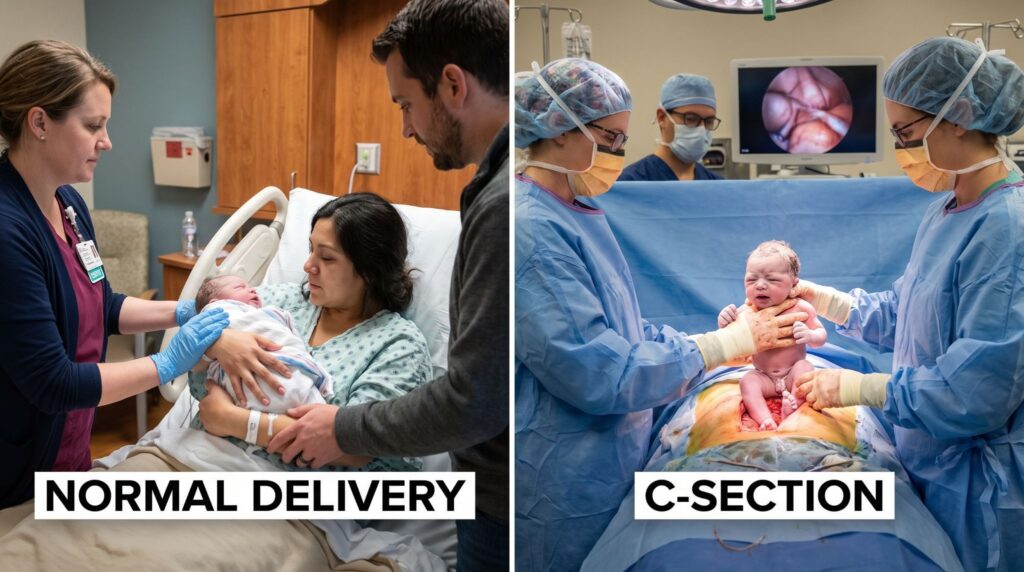
Choosing how to bring your baby into the world is one of the most significant decisions you will make during pregnancy. If you are exploring your options, you have likely encountered a flood of advice, internet forums, and well-meaning stories from family members.
Unfortunately, this milestone decision is often surrounded by misinformation. Separating myths from medical realities is essential for making an informed, confident choice for you and your baby.
When planning your delivery, partnering with a trusted gynecology hospital in Secunderabad ensures you receive expert, evidence-based care tailored to your unique health profile. Let’s break down the facts behind normal deliveries and Cesarean sections (C-sections).
The Medical Reality of a Normal Delivery
A normal (vaginal) delivery is the natural physiological process of childbirth. For low-risk pregnancies, medical guidelines generally favor a vaginal birth due to its natural progression and long-term health benefits.
- Shorter Recovery Time: Most women who have a normal delivery experience a significantly faster recovery, often walking within hours and returning to regular activities within a few weeks.
- Lower Infection Risks: Because it does not involve major abdominal surgery, the risk of deep-tissue infections, severe blood loss, and anesthesia complications is lower.
- Immediate Bonding and Lactation: Vaginal deliveries typically allow for immediate skin-to-skin contact, which stimulates the release of oxytocin, helping to initiate breastfeeding more smoothly.
- Respiratory Benefits for the Baby: As the baby passes through the birth canal, the physical compression helps clear fluid from their lungs, reducing the likelihood of transient tachypnea (temporary breathing difficulties at birth).
The Medical Reality of a C-Section
A C-section is a major abdominal surgery where the baby is delivered through incisions in the abdomen and uterus. While sometimes viewed as an “alternative option,” a C-section is a crucial, life-saving medical procedure.
- Planned (Elective) vs. Emergency: A C-section may be scheduled in advance due to known medical factors, or it may become necessary during labor if complications arise.
- Longer Healing Process: Recovery from a C-section takes longer—typically six to eight weeks. Managing incisional pain, avoiding heavy lifting, and wound care are essential parts of the postpartum period.
- Future Pregnancy Considerations: Having a C-section increases the likelihood of needing a repeat C-section in future pregnancies, though a Vaginal Birth After Cesarean (VBAC) is possible under the right medical conditions.
Debunking Common Childbirth Myths
Myth 1: “C-sections are the easy way out.”
The Reality: There is nothing “easy” about recovering from major surgery while caring for a newborn. C-section mothers experience deep tissue healing, surgical pain, and a longer restriction on physical activity compared to those who have a vaginal birth. Both methods require immense physical and mental strength.
Myth 2: “Once a C-section, always a C-section.”
The Reality: This is outdated medical advice. Many women are eligible for a VBAC if their previous C-section incision was a low-transverse cut and the underlying reason for the first C-section (like a breech baby) isn’t present in the current pregnancy. A specialized evaluation at a premier best multispecialty hospital in Secunderabad can determine if you are a safe candidate for a VBAC.
Myth 3: “Normal delivery guarantees a perfect recovery without complications.”
The Reality: While vaginal births generally have quicker recovery windows, they are not entirely without risk. Complications like perineal tearing, pelvic floor weakness, or emergency interventions can happen. Every birth journey is unique.
Myth 4: “Babies born via C-section miss out on essential immunity.”
The Reality: While it is true that passing through the birth canal exposes a baby to beneficial microbes that kickstart gut health, C-section babies build robust immune systems through breastfeeding, skin-to-skin contact, and routine care.
When is a C-Section Medically Necessary?
Obstetricians prioritize the safety of both mother and child. A C-section becomes the recommended path under several distinct medical circumstances:
- Developmental or Positional Issues: The baby is in a breech (feet/bottom first) or transverse (sideways) position.
- Placental Complications: Conditions like placenta previa, where the placenta covers the cervix, making a vaginal delivery unsafe.
- Maternal Health Conditions: Active infections (like herpes), severe preeclampsia (high blood pressure), or specific heart conditions.
- Stalled Labor: Prolonged labor where the cervix stops dilating despite strong contractions, or the baby does not descend.
- Fetal Distress: Signs that the baby is not getting enough oxygen during labor, requiring immediate delivery.
Making the Right Choice for Your Journey
The decision between a normal delivery and a C-section should never be based on fear, guilt, or societal pressure. It should be a collaborative choice made alongside your OB-GYN, rooted in clinical facts and your personal health history.
At Kasturi Hospitals, we prioritize patient safety, comfort, and personalized care. As a leading healthcare provider, our clinical teams are fully equipped to support you through a natural birth plan or perform precise surgical interventions when medically indicated. Your health history, pelvic anatomy, and fetal development will guide our specialists in recommending the safest path forward.
Frequently Asked Questions (FAQs)
1. Which delivery method is safer for the mother?
For low-risk pregnancies, a normal delivery is generally safer because it avoids the risks associated with major surgery, such as severe bleeding, infection, and prolonged recovery. However, if medical complications exist, a C-section becomes the safer choice to protect both mother and child.
2. How long does it take to recover from a normal delivery vs. a C-section?
Recovery from a normal delivery typically takes 2 to 4 weeks, with most mothers feeling significantly better within the first few days. A C-section requires major abdominal healing, taking roughly 6 to 8 weeks, during which heavy lifting and strenuous activity must be avoided.
3. Can I request a normal delivery if my doctor recommends a C-section?
You should thoroughly discuss the medical reasoning with your obstetrician. If a C-section is recommended due to critical factors like fetal distress, placenta previa, or a breech position, insisting on a vaginal birth can pose severe risks to you and your baby.
4. Is it possible to have a painless normal delivery?
Yes. Epidural anesthesia is a widely available option that helps manage labor pain effectively. It numbs the lower half of the body while allowing the mother to remain fully awake, alert, and capable of pushing during delivery.
5. What factors increase the chances of an emergency C-section?
An emergency C-section may be required if labor stops progressing over many hours, if the baby’s heart rate drops significantly (fetal distress), if the umbilical cord slips ahead of the baby, or if the mother develops sudden, severe elevated blood pressure.
6. Can I breastfeed immediately after a C-section?
Yes, you can breastfeed after a C-section. While it may take a little longer to find a comfortable position that avoids pressure on your abdominal incision (such as the football hold), skin-to-skin contact and nursing can begin in the recovery room as soon as the anesthesia allows.